Traditional Chinese Medicine course in Porto
Traditional Chinese Medicine in Porto: practical in-person training for clinical reasoning
Traditional Chinese Medicine is often taught either as abstract theory or as isolated techniques. This Porto training takes a different path: practical clinical reasoning, supervised application and integration with manual therapy.
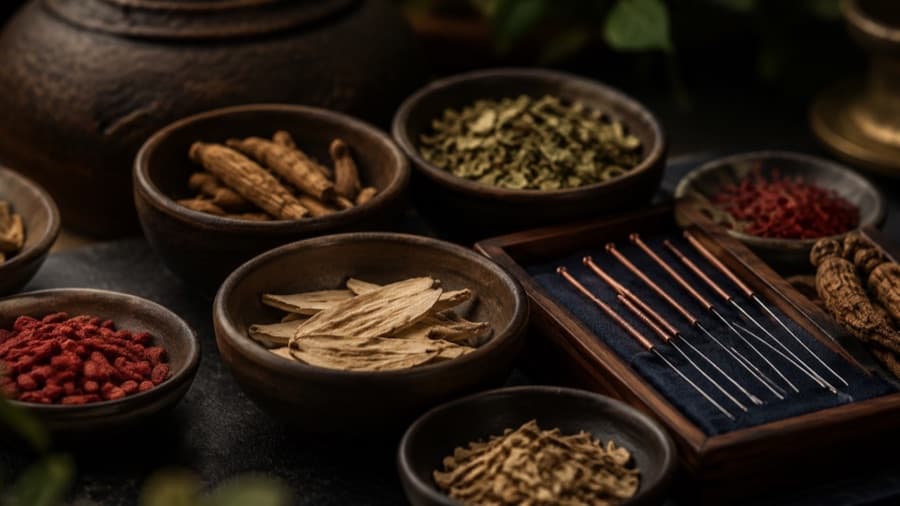
- Traditional Chinese Medicine taught as practical clinical reasoning
- In-person module in Porto after the online foundation
- Connection with acupuncture, manual therapy, pain and patient assessment
- Portuguese and English teaching environment
Why Traditional Chinese Medicine belongs in clinical education
Traditional Chinese Medicine offers a different way to observe the patient. It invites the clinician to consider patterns, regulation, pain, movement, internal balance, external signs and the relationship between symptoms. When taught responsibly, it does not replace anatomy or clinical reasoning. It expands the clinician’s ability to organize information and choose interventions with more nuance.
This course in Porto is not designed as a mystical performance. It is a practical in-person training for students who want to understand Traditional Chinese Medicine as part of a broader clinical curriculum. The work connects TCM concepts with acupuncture reasoning, manual therapy, pain presentations, patient observation and treatment strategy.
The in-person format is important because TCM is not only terminology. Students need to discuss cases, practice point location, understand patient presentation, learn how to communicate clearly and integrate the reasoning with manual therapy decisions. The Manual Therapy Europe online foundation prepares the conceptual base; the Porto module gives the supervised practical experience.
What the Porto TCM module emphasizes
The course emphasizes practical understanding over memorization. Students are guided through the logic of Traditional Chinese Medicine in a way that can support clinical work: how to observe, how to ask better questions, how to reason about patterns, how to connect symptoms and how to avoid reducing a patient to a single technique.
Because Prof. Joe Rosario’s background includes acupuncture, manual therapy, osteopathy, chiropractic and clinical research, TCM is presented in dialogue with other clinical languages. Students learn to respect the tradition while also keeping their feet in practical healthcare education. This is especially important for students who work with pain, movement, stress, chronic complaints or complex patient presentations.
The practical module can include discussion of meridians, point reasoning, palpation, therapeutic strategy, clinical observation and the way TCM can interact with manual therapy. The goal is not to overwhelm the student with endless theory. The goal is to make Traditional Chinese Medicine clinically intelligible and practically useful.
Why study TCM with Prof. Joe Rosario
Prof. Joe Rosario has taught thousands of clinicians and brings a rare international background. He is an acupuncturist in Canada, Ireland and Brazil, in addition to his work in physical therapy, osteopathy, chiropractic and natural medicine. This makes his teaching of Traditional Chinese Medicine especially relevant for students who do not want isolated doctrine, but a clinical bridge between traditions.
His teaching style is direct: what does this concept help you see, what does it help you decide, and how can it change the way you treat? Students are encouraged to connect theory to patient observation and to avoid using words they do not understand. TCM becomes a working clinical language rather than a decorative vocabulary.
This is also why the Porto course is practical. A student can read about meridians and patterns, but the classroom allows a teacher to correct location, reasoning, interpretation, communication and strategy. It allows students to ask the questions that appear only when theory meets the body of another person.
A practical path: online first, Porto second
The Manual Therapy Europe online foundation is required before the in-person stage. This requirement protects the quality of the Porto training. Students arrive prepared, familiar with the core concepts and ready to use the classroom for practice, discussion and correction rather than passive listening.
For searches such as Traditional Chinese Medicine course Porto, TCM course Portugal, acupuncture course Porto, or practical Traditional Chinese Medicine training, the offer should be clear: this is a presencial module, connected to a broader manual therapy curriculum, taught in Portuguese and English, and designed for serious clinical learning.
The course is particularly valuable for students who want a wider clinical lens. TCM can help clinicians think about regulation, symptom patterns, patient individuality and therapeutic strategy. Combined with manual therapy, it can enrich the way a practitioner listens, observes and plans treatment.
How TCM becomes practical in the classroom
Traditional Chinese Medicine can become confusing when students are asked to memorize concepts without seeing how they change the treatment plan. The Porto module is built to avoid that problem. Concepts are brought back to clinical questions: what does this observation suggest, what pattern is plausible, what else should be checked, and how could the intervention be chosen with more precision?
The in-person class gives students time to practice location, palpation, patient observation and communication. These are not minor details. A student may know the name of a point but still need correction in finding it. A student may repeat a traditional explanation but still need help translating it into clear clinical language. The classroom allows those corrections to happen directly.
The goal is to make TCM useful without turning it into vague language. Students are encouraged to connect Traditional Chinese Medicine with pain, movement, stress responses, chronic complaints and manual therapy strategy. This creates a bridge for students who want a broader therapeutic vocabulary while still respecting patient safety and clinical clarity.
Why this course matters for manual therapy students
A manual therapist often meets patients whose complaints do not fit neatly into one mechanical explanation. Traditional Chinese Medicine can help the student observe patterns of regulation, tension, sleep, digestion, stress, pain behavior and patient individuality. It does not need to replace biomechanics. It can sit beside biomechanics as another way to organize the clinical picture.
Prof. Joe Rosario’s teaching is especially suited to this bridge because his background crosses acupuncture, physical therapy, osteopathy, chiropractic and research. Students are not asked to abandon one clinical language for another. They are asked to become more precise, more observant and more capable of choosing a therapeutic path that makes sense for the person in front of them.
For students searching for a Traditional Chinese Medicine course in Porto, an acupuncture-related course in Portugal or a practical TCM module connected to manual therapy, this page defines the offer clearly. Study the foundation online first, then come to Porto for a 100% practical module focused on supervised reasoning and clinical application.
Enrolment
Payment and enrolment
Payment for the in-person Traditional Chinese Medicine stage is made by bank transfer to a Wise account after the online prerequisite and enrolment are confirmed. Wise account details should be sent privately to eligible students rather than published openly.
Prepare online, practice in Porto
Complete the Manual Therapy Europe online foundation first. Then attend the Porto module to turn Traditional Chinese Medicine concepts into practical clinical reasoning.