Chiropractic course in Porto
Chiropractic course in Porto: spine, extremities and 100% practical in-person training
This chiropractic course in Porto is built for students who want practical skill, not vague inspiration. The focus is spinal chiropractic, extremities, assessment, positioning, biomechanics and safe manual execution.
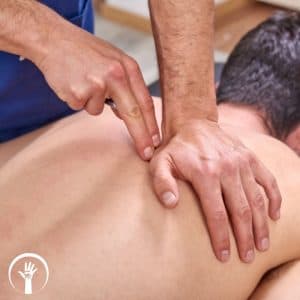
- Chiropractic for the spine and extremities
- 100% practical hands-on Porto module
- Safety, positioning, biomechanics and clinical reasoning
- Online foundation through Manual Therapy Europe before the in-person class
Why chiropractic must be taught hands-on
Chiropractic technique is physical, precise and unforgiving when taught superficially. A student needs to learn how to position the patient, how to position their own body, how to create a safe setup, how to control direction and amplitude, and how to decide whether a technique is appropriate. These details cannot be fully transmitted through video. They require supervised repetition.
The Porto chiropractic module is therefore 100% practical. The theory is prepared before the class through Manual Therapy Europe. In person, the student works on assessment, palpation, setup, line of drive, leverage, contact, patient comfort and correction. The goal is not to make people aggressive with manipulation. The goal is to make them safer, clearer and more technically competent.
Many students search for a chiropractic course in Portugal or a chiropractic course in Porto because they want something practical. This page is written for that student. The course is not a generic introduction. It is a practical path for people who want to understand chiropractic work with the spine and extremities in a disciplined, clinically responsible way.
Spinal chiropractic and extremities
The spine is central to chiropractic training, but the body is not only a spine. This course gives attention to spinal assessment and essential chiropractic adjustments while also including extremities. Students work with cervical, thoracic, lumbar, pelvic and sacroiliac mechanics, but they also learn to think about upper and lower limbs as part of the same movement system.
Chiropractic for the spine requires precision. The student must learn how to evaluate mobility, choose a target, create a setup, protect the patient and avoid unnecessary force. Chiropractic for extremities requires another kind of attention: smaller joints, different levers, functional complaints, sports-related demands and clinical adaptation. The course uses repetition to help students develop manual confidence without losing control.
The practical training emphasizes what a clinician actually needs: when to adjust, when not to adjust, how to prepare tissue, how to communicate with the patient, how to avoid fear-based technique and how to integrate chiropractic tools with broader manual therapy reasoning. A manipulation is not a trick. It is a clinical decision expressed through the hands.
Why study chiropractic with Prof. Joe Rosario
Prof. Joe Rosario has trained more than 10,000 clinicians and brings a background that crosses physical therapy, osteopathy, chiropractic, acupuncture and manual therapy education. That matters because chiropractic is stronger when it is taught inside a broader clinical map. The student learns not only how to perform a technique, but how to decide if that technique belongs in the case.
His teaching is practical and corrective. He watches how the student stands, where the contact is placed, whether the patient is protected, whether the vector makes sense and whether the technique is being forced. The corrections are often small, but they change everything. A better angle, a calmer setup, a cleaner contact or a more stable stance can transform the technique from clumsy to clinically usable.
This course also avoids irresponsible promises. The goal is not to sell chiropractic as magic. The goal is to teach manual skill with anatomy, biomechanics, reasoning and patient safety. That combination is what makes the course valuable for people who want to use chiropractic techniques seriously in clinical practice.
The Porto format and the online prerequisite
The pathway is hybrid in the correct order: online first, in person second. Manual Therapy Europe provides the online foundation so students arrive with the basic theoretical structure. The Porto module then becomes the practical laboratory, where students spend their time doing what matters most in chiropractic education: practicing under supervision.
This format protects the quality of the in-person class. If the theory has already been introduced online, the physical classroom does not need to become a lecture room. It can become a training room. Students can repeat setups, ask specific questions, receive individual correction and improve their hands-on performance.
For students searching online for chiropractic training in Porto, chiropractic course Portugal, spinal manipulation course, chiropractic for extremities or practical manual therapy course, this page makes the offer clear: the course is presencial, it is practical, it is taught in Portuguese and English, and it is connected to the Manual Therapy Europe online prerequisite.
What students should be able to improve
The chiropractic module is designed to improve the student’s relationship with setup, contact and timing. Many people think chiropractic is mainly about speed. In reality, speed without control is not technique. The student first needs to understand how to create a stable position, how to reduce unnecessary force, how to find the correct direction and how to protect both patient and practitioner during the movement.
Students also practice how to connect spinal and extremity work with broader manual therapy reasoning. A patient with shoulder pain may need local assessment, thoracic mobility, cervical reasoning, rib mechanics, muscular preparation or a completely different approach. A patient with lumbar pain may not be helped by a dramatic adjustment if the setup is wrong or the clinical indication is weak. The course trains students to think before they perform.
The value of the Porto class is that mistakes become visible. The teacher can see when the student is using too much arm force, losing body mechanics, missing the contact point, confusing the vector or moving before the patient is ready. Correcting these details is what turns chiropractic from a risky imitation into a disciplined clinical skill.
A serious alternative to superficial manipulation courses
Many short courses sell manipulation as a collection of impressive techniques. This course takes the opposite direction. The objective is to build a safer clinician, not a louder one. Students learn that confidence is not the absence of doubt; confidence is knowing what to check, what to avoid, what to repeat and when to choose another technique.
That is why the course includes both spine and extremities. It helps the student avoid a narrow view of chiropractic and understand the body as a connected mechanical system. The spine matters, but shoulders, hips, knees, ankles, wrists and elbows often change the clinical picture. The class gives students a practical vocabulary for working with those relationships.
For students who want chiropractic training in Portugal with real correction, this in-person Porto module is the practical stage. The online foundation gives the language. The classroom gives the hands. Together, they create a more serious route than trying to learn adjustment technique from isolated videos.
Enrolment
Payment and enrolment
Payment for the in-person chiropractic stage is made by bank transfer to a Wise account after the online prerequisite and practical enrolment are confirmed. Publishing bank details publicly is not recommended; eligible students can receive the transfer information directly.
Train chiropractic with supervision
Complete the Manual Therapy Europe online foundation first. Then use the Porto module to practice spine and extremity chiropractic techniques with direct correction from Prof. Joe Rosario.