Osteopathy course in Porto
Osteopathy course in Porto: 100% practical in-person training with Prof. Joe Rosario
A serious osteopathy course cannot be reduced to videos, protocols or memorized techniques. This in-person training in Porto is built for students who want to feel anatomy under their hands, learn how to reason through a patient presentation, and practice manual techniques with real correction.
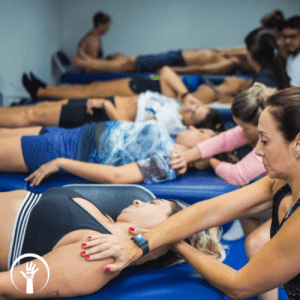
- In-person classes in Porto, Portugal
- 100% practical hands-on module
- Portuguese and English teaching environment
- Manual Therapy Europe online course required before the practical stage
Why study osteopathy in person
Osteopathy is a manual discipline. It depends on touch, perception, positioning, timing, force control and clinical reasoning. A student can understand the theory online, but the real transformation happens when an experienced teacher corrects the position of the hand, the angle of contact, the rhythm of the technique and the quality of the decision. That is why this course is deliberately presencial. The Porto module exists for the part of osteopathy that cannot be learned properly from a screen.
The objective is not to create a collector of techniques. The objective is to train a clinician who can evaluate, choose, adapt and apply. The student learns to look at posture, movement, tissue restriction, joint mechanics, fascial tension and patient response as parts of the same clinical picture. Osteopathy becomes a way of thinking with the hands, not a list of maneuvers copied from a manual.
Porto is the practical stage because students arrive after completing the Manual Therapy Europe online foundation. That sequence matters. The online stage gives the language, principles and conceptual map. The in-person stage is where the student tests that knowledge under supervision, receives correction and learns how to use osteopathic tools with safety and purpose.
What the practical osteopathy module covers
The course is centered on practical osteopathic assessment and treatment. Students work with palpation, structural evaluation, mobility testing, postural observation, fascial reasoning and manual techniques that connect the spine, pelvis, limbs, cranium, viscera and myofascial system. The emphasis is clinical usefulness: what to do, why to do it, when to avoid it and how to adapt it to the person in front of you.
A major part of the training is learning how to evaluate before touching with intention. Students practice how to identify restriction, how to compare sides, how to interpret movement quality and how to avoid forcing a technique into a case that needs another strategy. The course is practical, but it is not mechanical. Every technique must be connected to a clinical reason.
The hands-on work includes osteopathic contact, positioning, soft tissue preparation, joint and fascial techniques, cranial and visceral concepts, breathing mechanics and postural integration. The student is repeatedly brought back to the same question: what is the body asking for, and what is the safest, most precise manual answer?
Why study with Prof. Joe Rosario
Prof. Joe Rosario brings a rare combination of clinical practice, academic research and international teaching experience. He is a physical therapist in Canada, Brazil and Portugal; an osteopath in Canada, Brazil and Ireland; a chiropractor in Ireland and Brazil; an acupuncturist in Canada, Ireland and Brazil; and he also holds credentials in naturopathy, homeopathy and phytotherapy across multiple jurisdictions. This breadth is not presented as decoration. It shapes the way he teaches: wide clinical vision, but precise practical execution.
With two PhDs, postdoctoral research and more than 10,000 clinicians trained, Prof. Joe teaches osteopathy as a living clinical method. He does not separate technique from reasoning. Students are expected to understand anatomy, biomechanics, contraindications, patient safety and treatment goals. This is particularly important in manual therapy, where confidence without reasoning can become dangerous, and theory without practice can become useless.
The value of this course is direct correction. Many students can watch a technique and think they understand it. In class, the teacher can see what the student cannot see: the body is poorly positioned, the force is too high, the contact is vague, the lever is wrong, the rhythm is rushed or the clinical indication is weak. These corrections are the reason in-person education still matters.
A course for real clinical confidence
This osteopathy course is for people who want to become more useful with their hands. It is not designed around vague wellness language or decorative certificates. It is designed around the reality of clinical work: patients arrive with pain, fear, stiffness, compensation, poor movement and complex histories. The clinician needs a way to assess, decide and act.
Because the course is 100% practical in Porto, the student should expect active participation. You will watch, practice, receive correction, change partners, repeat techniques and learn how small details change the result. The in-person format makes the course more demanding, but also more honest. Osteopathy is learned through supervised practice.
For students searching in Portugal, the message is simple: if you are looking for an osteopathy course in Porto, an osteopathy course in Portugal, or practical osteopathic training with an experienced international teacher, this is the path. Complete the Manual Therapy Europe online foundation first, then come to Porto for the hands-on module with Prof. Joe Rosario.
What students should expect in class
The Porto osteopathy module is intentionally physical. Students should expect to spend the class observing demonstrations, practicing in pairs, changing roles, receiving corrections and repeating the same movement until the hands become more precise. This repetition is not a secondary detail. It is the core of the course, because osteopathy depends on the ability to reproduce a safe contact with consistency.
The class also teaches professional judgement. A good osteopathic technique is not only a beautiful movement. It must fit the patient, the tissue, the complaint, the contraindications and the goal of treatment. Students are guided to ask better clinical questions before applying force: what am I testing, what changed, what did not change, and what does this response tell me about the next step?
By the end of the in-person stage, the student should have a clearer relationship with assessment, palpation and manual decision-making. The promise is not instant mastery, because serious manual therapy takes years. The promise is better direction: a stronger technical base, more confident hands and a practical understanding of how osteopathic reasoning can enter real clinical work.
Enrolment
Payment and enrolment
Payment for the in-person stage is made by bank transfer to a Wise account after the student has completed the required Manual Therapy Europe online course and the practical module is confirmed. Bank details should not be published openly on this page; they can be sent directly to eligible students during enrolment.
Ready for the practical stage in Porto?
Start with the Manual Therapy Europe online foundation. Once the theory is complete, the Porto osteopathy module becomes the place to practice, correct and refine the techniques in person.